 astrophysics data system
Opening 35 years of astronomy’s public voice to the world — free, permanent, and searchable
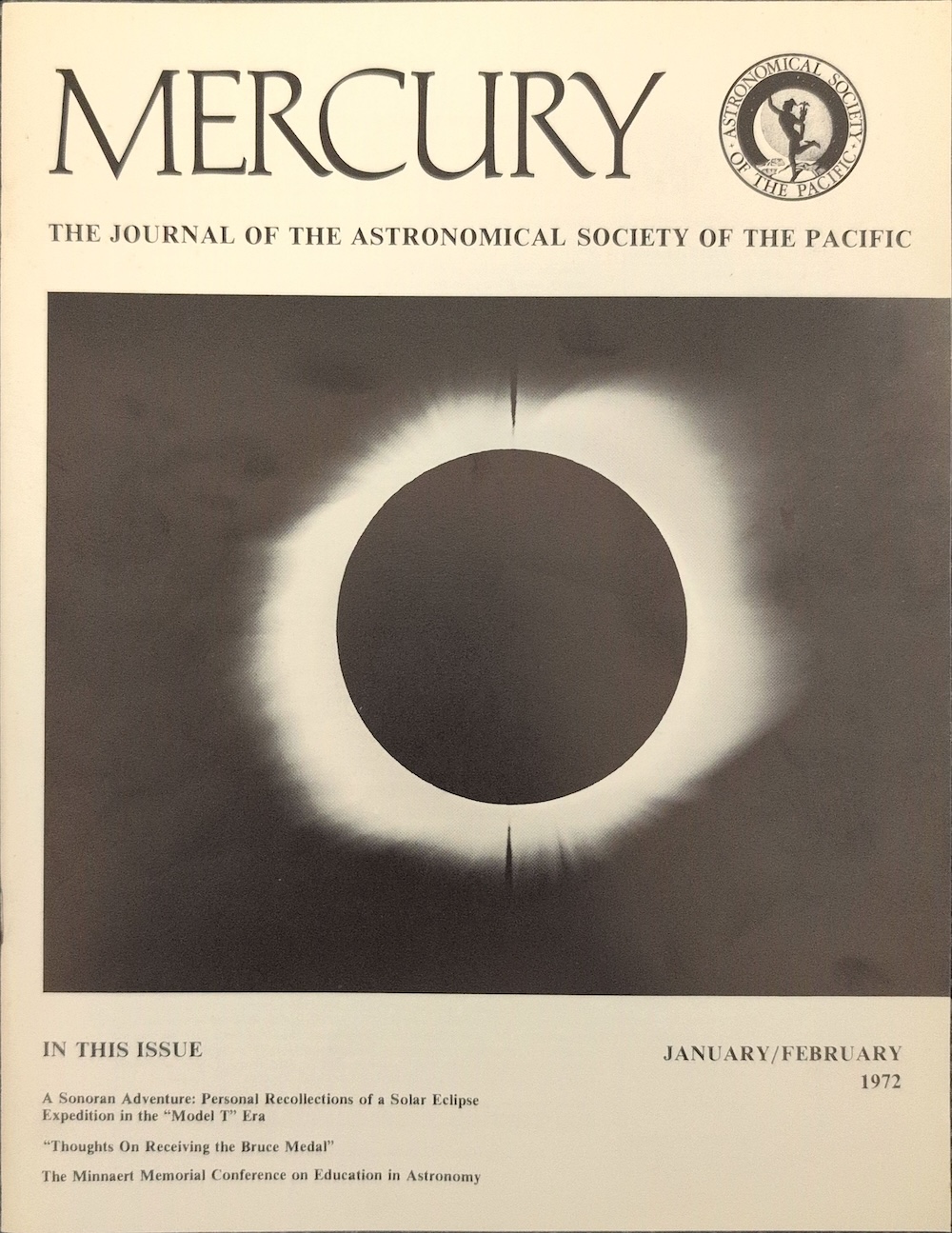
Your donation will fund the digitization of Mercury magazine, the Astronomical Society of the Pacific’s popular-level publication. This effort will digitize the magazine’s issues printed from 1972 to 2007 and make them freely available in the NASA Astrophysics Data System and Science Explorer, allowing the entire publication to be openly accessible online.
A 35-year gap in the public record of astronomy
Founded in 1889, the Astronomical Society of the Pacific has spent more than a century connecting professional astronomers, educators, and the public. Its magazine Mercury debuted in January 1972 with a clear purpose: to interpret the results of astronomical research for the non-specialist. Across the decades that followed, it chronicled the space age as it unfolded — the Viking landings, the first exoplanets, the Hubble era — in the words of the scientists and science writers who lived it.
Issues from 2007 forward are online. Everything printed between 1972 and 2007 exists only on paper, scattered across member bookshelves and library stacks, effectively invisible to anyone searching today.
Where these issues will live
The Astrophysics Data System, operated by the Smithsonian Astrophysical Observatory — part of the Center for Astrophysics | Harvard & Smithsonian — under a grant from NASA, is the front door to astronomical literature for researchers worldwide, with bibliographic information on more than 13 million publications.
Its next-generation platform, Science Explorer (SciX), extends that same infrastructure across planetary science, heliophysics, and the Earth and environmental sciences. Placing Mercury in ADS and SciX means every article becomes full-text searchable, permanently citable, and linked alongside the research literature it was written to explain — at no cost to any reader, anywhere.
What your gift makes possible
- Thirty-five years of issues preserved. Every printed volume from 1972 through 2007, scanned and archived to modern standards.
- Free and open access, permanently. No subscription, no paywall, no institutional affiliation required.
- Discoverable by search. Full-text indexing places these articles in front of the researchers, students, and readers looking for them.
- A resource for teaching and history. Educators, historians of science, and journalists gain a primary record of how discoveries were explained to the public as they happened.
To Make a Gift
Please note: The giving form contains a designation dropdown. Donors must select “SAO Mercury Magazine Digitization” for the gift to be directed to this project.