 astrophysics data system
EGU26: Vienna Waited For Us!
Suze Kundu & SciX Team
04 Jun 2026
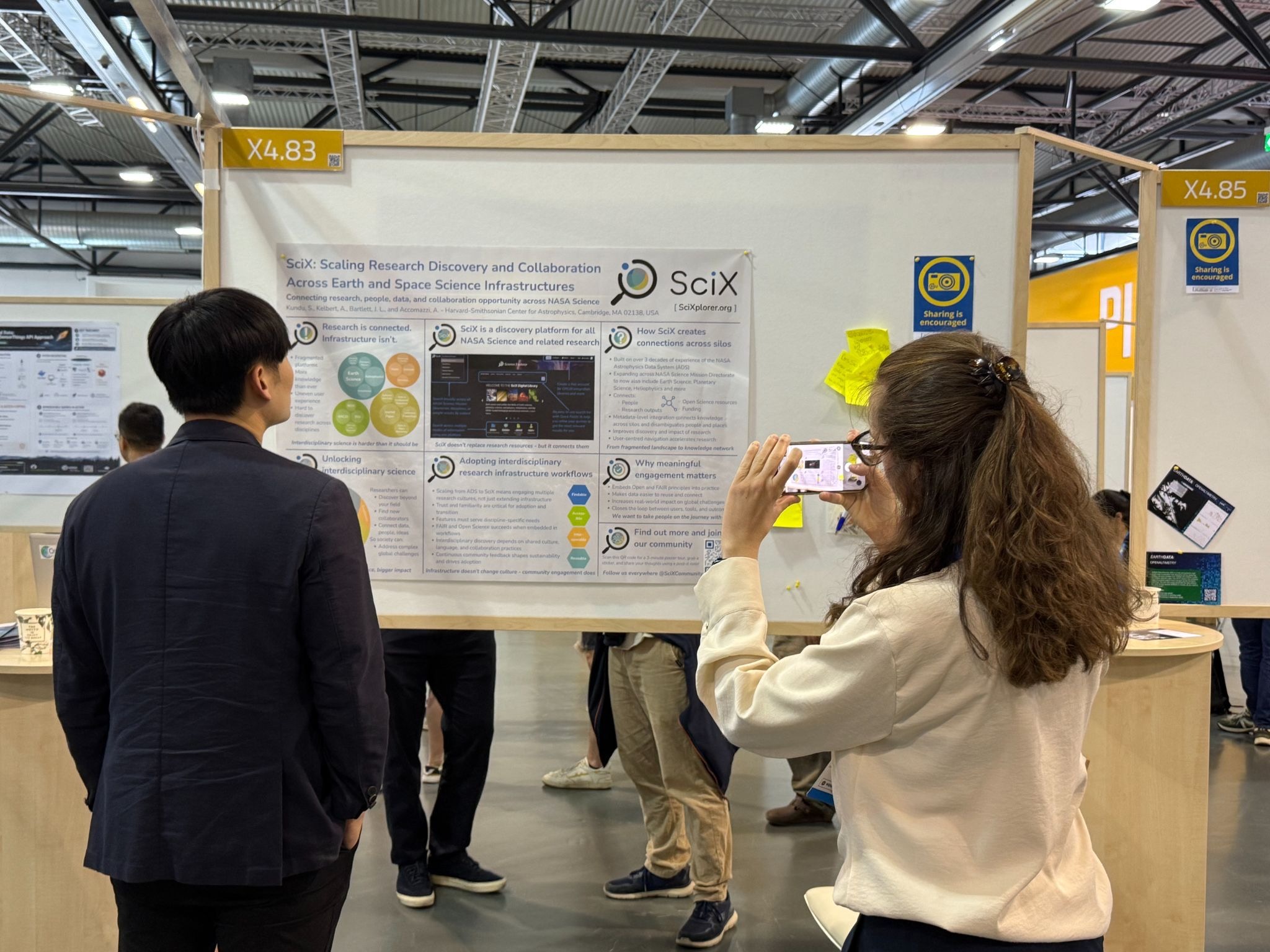
Usually when we write about our conference reflections, we talk about the talks we gave, the posters we displayed, and the other activities we took part in - and sure, we did those things at EGU 2026 in Vienna, Austria in May 2026. Dr Anna Kelbert, Project Scientist for Earth Science, gave a talk on SciXplorer, and Dr. Suze Kundu, Research Community Engagement Consultant, showcased a poster on how SciX is a great resource for researchers wanting to make their research more FAIR and Open. And of course the team were also doing demonstrations and having chats in a swag-laden booth.
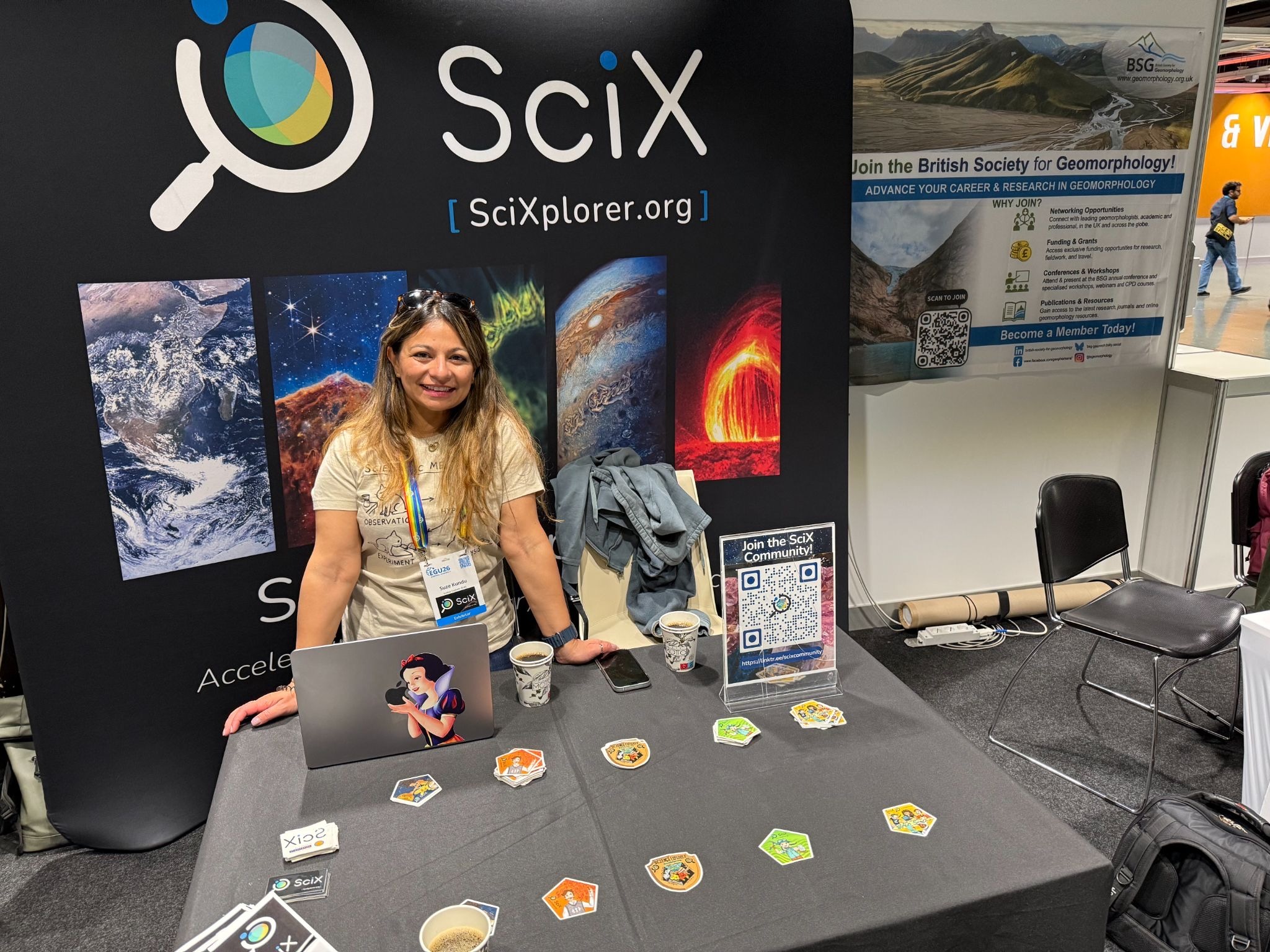
But, if we’re honest, that’s not what we’ll remember most from EGU 2026. No, it’s not the dance-offs and disco foxes of the EGU Wrap Party - it’s the incredible enthusiasm, curiosity, and encouragement we received from researchers from around the world. Throughout the week, scientists stopped by to explore SciX, tell us about their work, share ideas for the future, and let us know what they find valuable about our platform.
So for this blog post, we wanted to hand it over to the voices we heard at EGU26.
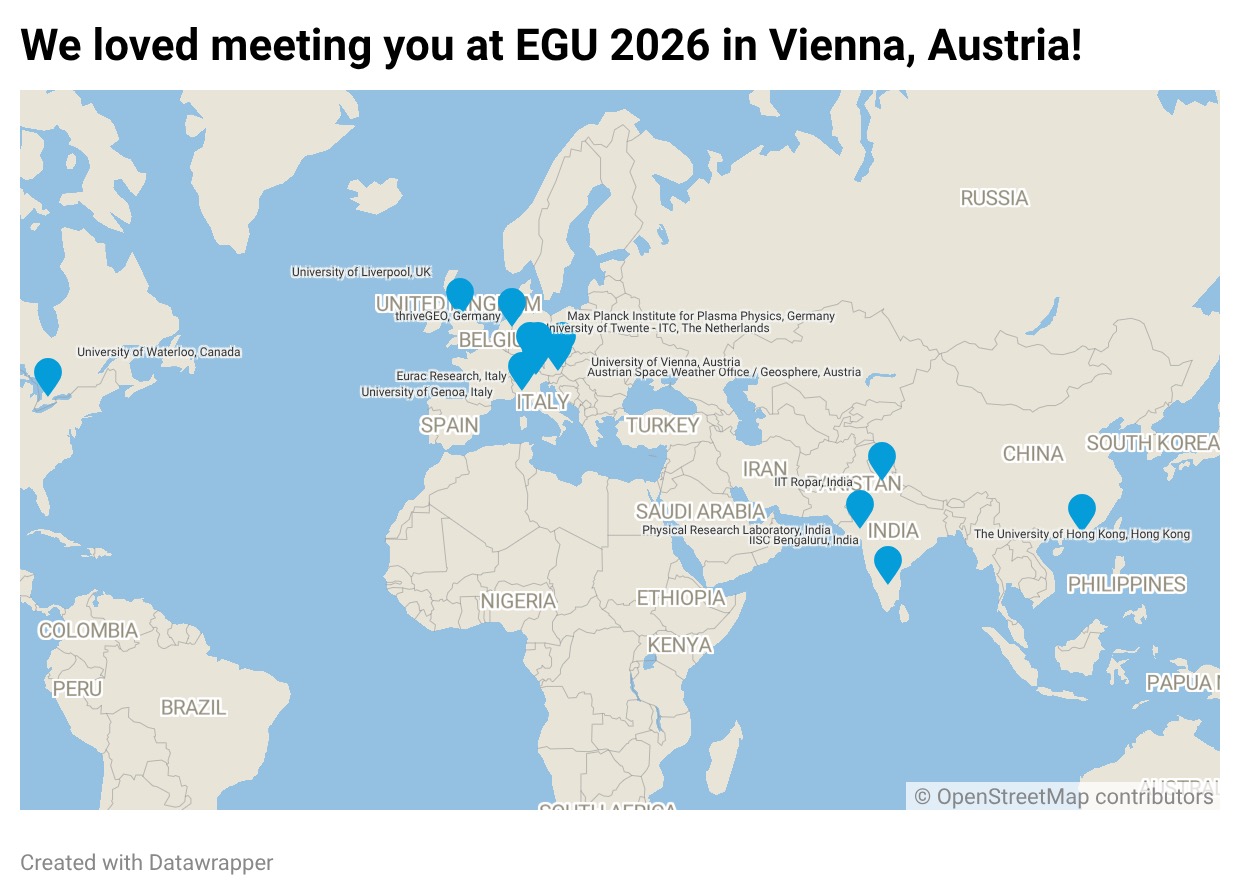
Voices from the Global Research Community
Nice network opportunities, broad range of possibilities to find papers related to author or topic. Great citation finding methods.
Excellent tool to visually explore the connections from the library. Very insightful.
Easy to use tool. Very interesting.
Great communication with people, great library resource.
Very cool tool, a great alternative for Web of Science and Google Scholar. I really like the option to explore the network of the papers and the authors, very useful!
A very nice tool for published papers database compared to Google Scholar. User friendly GUI.
I find it really interesting that data is being curated. As a consultant this allows me to do data discovery and have potential starting points for my training developments. Then I know what data is available and free access.
Very useful tool and free!
Very meaningful and great tool for paper database. Look forward to use it!
It's very helpful to have an expanded version of ADS that includes Earth and planetary sciences! This will make it easier for exoplanet scientists to find relevant Solar System papers.
Very handy to get information and find peers in my research areas.
It's very informative and handy to get all the information regarding your research area.
Very helpful, especially for early researchers. And the web page, too good. Kudos to the developers.
I found it very informative and am excited to explore.
I found it very amazing for sorting references for writing papers and accessing them from anywhere, everything altogether.
A nice, modern interface. It's very important to bring all of these fields together. I work somewhere that spans meteorology, geoscience and physics, and I appreciate its usefulness.
What We Learned
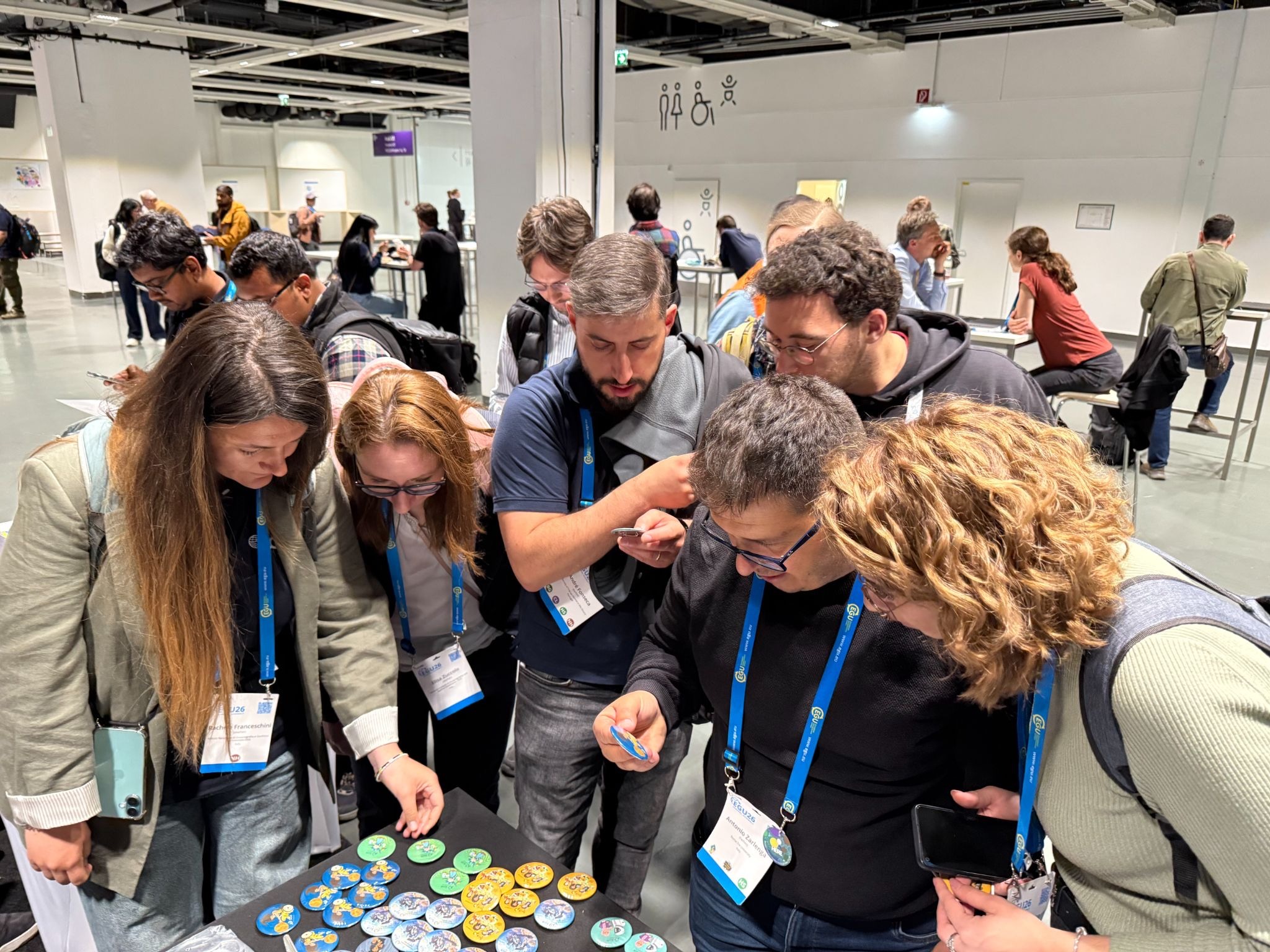
One of the most exciting things about EGU is the sheer diversity of research represented in a single place. Over the course of a few days, we spoke with astrophysicists, atmospheric scientists, remote sensing experts, seismologists, glaciologists, disaster risk specialists, planetary scientists, consultants, students, postdocs, and research leaders.
Despite their different disciplines, many of them were surprised and excited to discover some common values and features of the SciXplorer platform, including:
- The value of visualising connections between papers, authors, and ideas
- The importance of bringing research communities together across disciplines
- The need for accessible, discoverable research infrastructure
- The benefit of having free tools that support researchers wherever they are in their careers
Conversations like the ones we had at EGU 2026 reinforce why SciX exists in the first place. Research is increasingly interdisciplinary, collaborative, and global. The tools we use to discover, understand, and connect knowledge should reflect that reality.
Thank You, EGU!
To everyone who visited the SciX booth, attended Anna’s presentation, stopped by Suze’s poster, shared feedback, tested features, suggested improvements, or simply came over to say hello: thank you.
SciX is built by researchers for researchers, and events like EGU remind us how fortunate we are to work alongside such an engaged, thoughtful, and generous community. See you at the next conference!
Questions or feedback? Contact us at adshelp@cfa.harvard.edu.